Fale upałów nie są już zjawiskiem wyjątkowym. We Francji wysokie temperatury coraz częściej stanowią realne ryzyko zawodowe. Dotyczy to zwłaszcza budownictwa, robót publicznych, rolnictwa, logistyki, przemysłu i prac sezonowych.
Pracodawca musi się odpowiednio przygotować. Powinien wcześniej ocenić ryzyko i wdrożyć środki ochrony. Nie chodzi tylko o komfort pracowników. Kluczowe jest ich zdrowie i bezpieczeństwo.
Zgodnie z art. L.4121-1 Code du travail, pracodawca musi zapewnić bezpieczeństwo i chronić zdrowie pracowników. Obejmuje to działania prewencyjne, szkolenia oraz właściwą organizację pracy.
Od 2025 r. przepisy zostały wzmocnione. Dekret n° 2025-482 z 27 maja 2025 r. wprowadził szczególne zasady ochrony przed upałem. Pracodawca musi traktować wysoką temperaturę jako ryzyko. Powinien je ocenić, udokumentować i ograniczyć.
Upał jako ryzyko zawodowe
Wysoka temperatura może powodować odwodnienie, zmęczenie i zawroty głowy. W skrajnych przypadkach prowadzi do udaru cieplnego. Upał zwiększa też ryzyko wypadków. Obniża koncentrację i spowalnia reakcje.
Ryzyko dotyczy pracy na zewnątrz i w pomieszczeniach. Szczególnie wtedy, gdy ciepło się kumuluje. Art. R.4463-2 Code du travail zobowiązuje pracodawcę do oceny tego ryzyka.
Jeśli ryzyko jest istotne, pracodawca musi podjąć działania. Powinien powiązać je z oceną ryzyka zawodowego. W razie potrzeby należy je ująć w DUERP.
Praca w pomieszczeniach zamkniętych
Pracodawca musi zadbać o odpowiednią temperaturę w miejscu pracy. Wynika to z art. R.4223-13 Code du travail.
Nie oznacza to obowiązku instalacji klimatyzacji. Pracodawca powinien jednak ograniczyć ryzyko przegrzania. Może zastosować wentylację, rolety lub zacienienie. Pomaga też poprawa cyrkulacji powietrza i ograniczenie źródeł ciepła.
Warto zapewnić chłodniejsze miejsca odpoczynku. Należy też tak zorganizować pracę, aby skrócić czas przebywania w wysokiej temperaturze.
Praca na zewnątrz i place budowy
Pracownicy na zewnątrz wymagają szczególnej ochrony. Dotyczy to budownictwa, rolnictwa i prac drogowych.
Pracodawca powinien dostosować organizację pracy. Najcięższe zadania należy planować na chłodniejsze godziny. Trzeba też wprowadzić częstsze przerwy i rotację zadań. Ważny jest dostęp do zacienionych miejsc.
Na budowie kluczowa jest woda. Art. R.4534-143 Code du travail nakłada obowiązek jej zapewnienia. Jeśli brak bieżącej wody, pracodawca musi dostarczyć co najmniej 3 litry dziennie na osobę.
Art. R.4225-2 Code du travail potwierdza ogólny obowiązek zapewnienia wody pitnej.
Jakie środki prewencyjne powinien wdrożyć pracodawca?
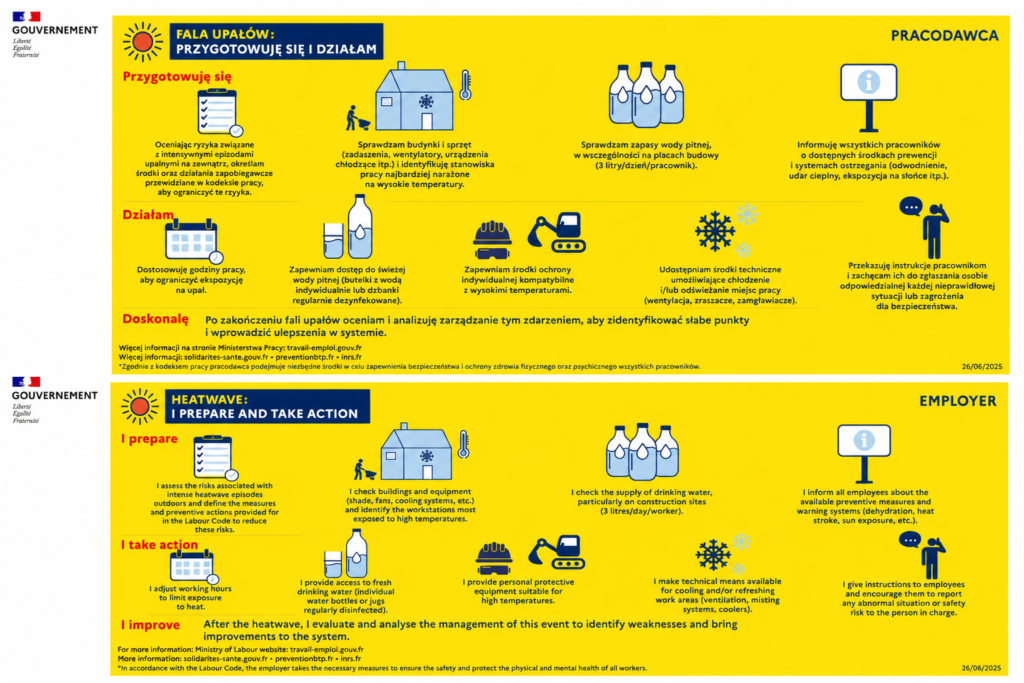
Art. R.4463-3 Code du travail wskazuje działania prewencyjne. Pracodawca powinien ograniczać ekspozycję na upał. Może zmienić organizację pracy i dostosować czas pracy.
W praktyce oznacza to przesunięcie zadań na chłodniejsze godziny. Można też ograniczyć ciężkie prace lub czasowo je wstrzymać.
Pracodawca powinien stosować środki techniczne. Należą do nich wentylacja, zacienienie i urządzenia chłodzące. Pomocne są też zamgławiacze i izolacja.
Ważny jest dobór sprzętu i PPE. Środki ochrony nie mogą zwiększać ryzyka przegrzania. Jeśli są konieczne, trzeba dostosować organizację pracy.
Informacja, szkolenie i procedury alarmowe
Pracownicy muszą znać objawy zagrożenia. Dotyczy to odwodnienia i udaru cieplnego. Pracodawca ma obowiązek ich informować i szkolić.
Powinien jasno określić zasady działania. Pracownik musi wiedzieć, kiedy przerwać pracę i komu zgłosić problem. Ważna jest też znajomość punktu pierwszej pomocy.
Szczególnej uwagi wymagają pracownicy delegowani i tymczasowi. Trzeba upewnić się, że rozumieją instrukcje i stosują je w praktyce.
Alerty Météo-France i decyzje prefektur
System Météo-France informuje o upałach. Wynika to z art. R.4463-1 Code du travail.
Pracodawca powinien regularnie sprawdzać alerty. Musi też śledzić decyzje prefektur. Władze lokalne mogą wprowadzać dodatkowe środki.
Prefektura może pozwolić na wcześniejsze rozpoczęcie pracy. Często dotyczy to budownictwa. Może też ograniczyć hałas i inne uciążliwości.
W skrajnych przypadkach prace mogą zostać wstrzymane. Dotyczy to sytuacji, gdy zagrożenie jest wysokie.
Pracownicy delegowani i podwykonawcy
Koordynacja jest kluczowa. Dotyczy to pracowników delegowanych i podwykonawców.
Wszyscy muszą znać zasady pracy w upale. Chodzi o dostęp do wody, przerwy i procedury alarmowe.
Brak komunikacji obniża skuteczność działań. Nawet dobre procedury mogą wtedy nie działać.
Praktyczna lista kontrolna dla pracodawcy
Przed i w trakcie upałów pracodawca powinien sprawdzić:
- czy ocenił ryzyko związane z temperaturą;
- czy wdrożył środki prewencyjne i ujął je w DUERP;
- czy zapewnił odpowiednią ilość wody;
- czy pracownicy mają dostęp do miejsc odpoczynku;
- czy dostosował godziny pracy;
- czy ograniczył ciężkie zadania w najgorętszych godzinach;
- czy poinformował pracowników o zagrożeniach;
- czy kierownicy wiedzą, jak reagować;
- czy PPE są dostosowane do warunków;
- czy sprawdził alerty Météo-France i decyzje prefektury;
- czy przekazał instrukcje podwykonawcom.
Podsumowanie
Fala upałów to realne ryzyko zawodowe. Pracodawca musi je ocenić i ograniczyć. Powinien też dostosować organizację pracy.
Najważniejsze działania to zapewnienie wody i zmiana godzin pracy. Trzeba też ograniczyć ekspozycję i informować pracowników.
W niektórych sektorach ważne są decyzje prefektur. Dotyczy to zwłaszcza budownictwa i rolnictwa.
Dobre przygotowanie zmniejsza ryzyko wypadków. Chroni też przed odwodnieniem i udarem cieplnym.
Dla pracodawcy oznacza to konieczność wcześniejszego przygotowania organizacji pracy, oceny ryzyka i wdrożenia konkretnych środków ochrony. Nie chodzi wyłącznie o komfort pracowników, ale o obowiązek ochrony ich zdrowia i bezpieczeństwa.
Zgodnie z art. L.4121-1 Code du travail, pracodawca ma obowiązek podjąć niezbędne środki w celu zapewnienia bezpieczeństwa oraz ochrony zdrowia fizycznego i psychicznego pracowników. Obowiązek ten obejmuje działania prewencyjne, informowanie, szkolenie oraz odpowiednią organizację pracy.
Od 2025 r. przepisy te zostały dodatkowo wzmocnione. Dekret n° 2025-482 z 27 maja 2025 r. wprowadził do Code du travail szczególne zasady dotyczące ochrony pracowników przed ryzykami związanymi z epizodami intensywnego upału. Oznacza to, że pracodawca powinien traktować wysoką temperaturę jako ryzyko, które należy ocenić, udokumentować i ograniczyć odpowiednimi środkami.
Upał jako ryzyko zawodowe
Ekspozycja na wysoką temperaturę może prowadzić do odwodnienia, silnego zmęczenia, zawrotów głowy, wyczerpania cieplnego, a w najpoważniejszych przypadkach do udaru cieplnego. Upał zwiększa również ryzyko wypadków przy pracy, ponieważ obniża koncentrację, spowalnia reakcje i utrudnia wykonywanie prac fizycznych.
Ryzyko to dotyczy zarówno pracy na zewnątrz, jak i pracy w pomieszczeniach zamkniętych, jeżeli dochodzi w nich do kumulacji ciepła. Dlatego art. R.4463-2 Code du travail przewiduje, że pracodawca ocenia ryzyka związane z ekspozycją pracowników na epizody intensywnego upału, zarówno w pomieszczeniach, jak i na zewnątrz.
Jeżeli ocena wykaże ryzyko dla zdrowia lub bezpieczeństwa, pracodawca musi określić odpowiednie działania prewencyjne. W praktyce powinny one zostać powiązane z oceną ryzyka zawodowego i, jeżeli ryzyko jest istotne, uwzględnione w DUERP.
Praca w pomieszczeniach zamkniętych
W przypadku pracy w pomieszczeniach zamkniętych pracodawca musi zadbać o to, aby temperatura była dostosowana do rodzaju wykonywanej pracy. Wynika to z art. R.4223-13 Code du travail, który odnosi się do temperatury w pomieszczeniach przeznaczonych do pracy.
Nie oznacza to automatycznego obowiązku instalacji klimatyzacji w każdym miejscu pracy. Pracodawca powinien jednak zastosować środki pozwalające ograniczyć ryzyko przegrzania, takie jak wentylacja, zacienienie, rolety, poprawa cyrkulacji powietrza, ograniczenie źródeł ciepła lub reorganizacja stanowisk pracy.
W pomieszczeniach szczególnie narażonych na nagrzewanie warto również przewidzieć chłodniejsze miejsca odpoczynku oraz taką organizację pracy, która ograniczy czas przebywania pracowników w najwyższej temperaturze.
Praca na zewnątrz i place budowy
Pracownicy wykonujący pracę na zewnątrz muszą być chronieni przed skutkami warunków atmosferycznych, w tym przed falą upałów. W praktyce dotyczy to szczególnie budownictwa, robót publicznych, rolnictwa, montażu konstrukcji, prac drogowych, prac sezonowych i prac prowadzonych na otwartej przestrzeni.
W tych sektorach kluczowe jest nie tylko zapewnienie środków ochrony, ale także dostosowanie samej organizacji pracy. Prace najbardziej obciążające fizycznie powinny być, w miarę możliwości, planowane na chłodniejsze godziny dnia. Pracodawca powinien również przewidzieć częstsze przerwy, rotację zadań, ograniczenie pracy w pełnym słońcu oraz dostęp do zacienionych lub chłodniejszych miejsc odpoczynku.
Na placach budowy szczególne znaczenie ma dostęp do wody. Art. R.4534-143 Code du travail przewiduje obowiązek zapewnienia pracownikom wody pitnej i świeżej, a gdy nie ma dostępu do bieżącej wody — co najmniej 3 litrów wody dziennie na pracownika.
Niezależnie od tego, art. R.4225-2 Code du travail nakłada na pracodawcę ogólny obowiązek zapewnienia pracownikom świeżej wody pitnej.
Jakie środki prewencyjne powinien wdrożyć pracodawca?
Art. R.4463-3 Code du travail wskazuje przykładowe działania, na których powinna opierać się prewencja ryzyk związanych z intensywnym upałem. Pracodawca powinien przede wszystkim ograniczać ekspozycję na wysoką temperaturę poprzez dobór odpowiednich metod pracy, zmianę organizacji stanowisk oraz dostosowanie czasu pracy.
W praktyce oznacza to możliwość przesunięcia niektórych zadań na chłodniejsze godziny, ograniczenia najbardziej fizycznych prac, zmniejszenia tempa pracy lub czasowego wstrzymania czynności, które w danych warunkach stwarzają zbyt duże ryzyko.
Pracodawca powinien również stosować środki techniczne ograniczające nagrzewanie miejsc pracy. Może to obejmować wentylację, zacienienie, urządzenia chłodzące, zamgławiacze, izolację lub zmianę rozmieszczenia stanowisk.
Bardzo ważny jest także dobór odpowiedniego sprzętu roboczego i środków ochrony indywidualnej. PPE powinny chronić pracownika, ale nie mogą jednocześnie nadmiernie zwiększać ryzyka przegrzania. Jeżeli stosowanie kasków, odzieży ochronnej, rękawic lub innych środków ochrony jest konieczne, pracodawca powinien dostosować organizację pracy tak, aby ograniczyć obciążenie cieplne.
Informacja, szkolenie i procedury alarmowe
Pracownik powinien wiedzieć, jak rozpoznać pierwsze objawy zagrożenia. Dotyczy to zwłaszcza odwodnienia, wyczerpania cieplnego i udaru cieplnego. Informacja i szkolenie są częścią obowiązków prewencyjnych pracodawcy wynikających z art. L.4121-1 i L.4121-2 Code du travail.
W praktyce pracodawca powinien jasno wskazać, kiedy należy przerwać pracę, komu zgłosić złe samopoczucie, gdzie znajduje się punkt pierwszej pomocy i kto jest osobą odpowiedzialną na miejscu.
Szczególnej uwagi wymagają pracownicy izolowani, pracownicy delegowani, pracownicy tymczasowi oraz osoby, które nie znają dobrze lokalnych procedur. W ich przypadku sama informacja ogólna może nie wystarczyć — konieczne jest upewnienie się, że instrukcje zostały zrozumiane i są stosowane na miejscu pracy.
Alerty Météo-France i decyzje prefektur
Epizod intensywnego upału jest powiązany z systemem czujności Météo-France. Wynika to z art. R.4463-1 Code du travail oraz z rozporządzenia z 27 maja 2025 r., które określa progi czujności dla systemu „canicule”.
Dlatego pracodawca powinien regularnie monitorować alerty pogodowe. Sam alert Météo-France nie zawsze wystarcza jednak do pełnej oceny sytuacji. W wielu regionach prefektury mogą wprowadzać dodatkowe, lokalne środki organizacyjne, szczególnie przy czerwonym alercie upałowym.
Przykładowo, prefektura może wyjątkowo zezwolić firmom z sektora budownictwa i robót publicznych na wcześniejsze rozpoczęcie niektórych prac, na przykład od godziny 5:00 rano, aby ograniczyć ekspozycję pracowników na najwyższe temperatury. Jednocześnie może nałożyć obowiązek ograniczenia hałasu, informowania mieszkańców i ograniczenia uciążliwości do ścisłego minimum.
W niektórych przypadkach możliwe jest również czasowe zawieszenie prac wykonywanych na zewnątrz w najgorętszych godzinach dnia, jeżeli warunki stwarzają szczególne zagrożenie dla zdrowia i bezpieczeństwa pracowników.
Z tego powodu w okresie fali upałów pracodawca powinien sprawdzać nie tylko komunikaty pogodowe, ale również decyzje właściwej prefektury dla departamentu, w którym prowadzone są prace.
Pracownicy delegowani i podwykonawcy
W przypadku pracowników delegowanych, podwykonawców i pracowników tymczasowych kluczowa jest koordynacja. Pracodawca, zleceniodawca, kierownik budowy lub koordynator BHP powinni upewnić się, że wszystkie osoby obecne na miejscu pracy znają zasady obowiązujące w okresie upałów.
Dotyczy to w szczególności dostępu do wody, miejsc odpoczynku, godzin pracy, procedur alarmowych, osoby kontaktowej na miejscu oraz ewentualnych decyzji prefektury.
Brak jasnej komunikacji może sprawić, że środki prewencyjne będą formalnie istnieć, ale nie będą skutecznie stosowane przez wszystkich pracowników obecnych na placu budowy lub w zakładzie.
Praktyczna lista kontrolna dla pracodawcy
Przed falą upałów i w jej trakcie pracodawca powinien sprawdzić, czy:
- ryzyko związane z wysoką temperaturą zostało ocenione;
- środki prewencyjne zostały ujęte w organizacji pracy i, jeżeli to konieczne, w DUERP;
- zapewniono wystarczającą ilość świeżej wody pitnej;
- pracownicy mają dostęp do zacienionych lub chłodniejszych miejsc odpoczynku;
- godziny pracy zostały dostosowane do warunków pogodowych;
- najbardziej obciążające zadania nie są wykonywane w najgorętszych godzinach;
- pracownicy zostali poinformowani o objawach przegrzania;
- kierownicy zespołów wiedzą, jak reagować w razie złego samopoczucia pracownika;
- środki ochrony indywidualnej są odpowiednie do warunków pracy;
- sprawdzono alerty Météo-France oraz komunikaty właściwej prefektury;
- podwykonawcy i pracownicy delegowani otrzymali jasne instrukcje.
Podsumowanie
Fala upałów w pracy to nie tylko kwestia organizacyjna, ale realne ryzyko zawodowe. Francuskie przepisy wymagają od pracodawcy oceny tego ryzyka, wdrożenia środków prewencyjnych oraz dostosowania organizacji pracy do warunków pogodowych.
Najważniejsze działania to przewidywanie ryzyka, zapewnienie wody, dostosowanie godzin pracy, ograniczenie ekspozycji, informowanie pracowników i bieżące monitorowanie sytuacji. W sektorach takich jak budownictwo, roboty publiczne, rolnictwo czy prace sezonowe szczególnie ważne jest również sprawdzanie lokalnych decyzji prefektury.
Dobrze przygotowana procedura pozwala nie tylko spełnić obowiązki prawne, ale przede wszystkim ograniczyć ryzyko wypadków, odwodnienia, wyczerpania cieplnego i udaru cieplnego.